

Minimally Invasive Ultrasound-Guided Treatment Offers Long-Term Relief for Carpal Tunnel Syndrome
New research suggests an ultrasound-guided minimally invasive procedure may provide lasting symptom relief with fewer side effects than repeated steroid treatment.
A new orthopedic study reported that an ultrasound-guided minimally invasive technique can provide long-term relief for patients with carpal tunnel syndrome while potentially reducing some problems associated with steroid treatment.

MEDICALLY REVIEWED BY DR. ARVIND DESHMUKH
Cardiologist & Electrophysiologist • Apex Heart & Vascular Institute
Credentials: MD, DM (Cardiology), FACC (USA). Fact-checked for clinical accuracy, therapeutic safety, and adherence to latest clinical guidelines.
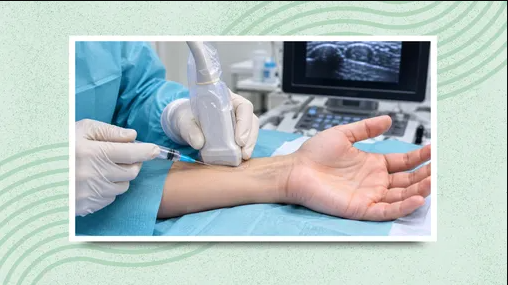
Carpal tunnel syndrome occurs when the median nerve is compressed as it passes through the wrist, causing symptoms such as numbness, tingling, weakness and pain in the hand. Severe or persistent cases can interfere with work, sleep and everyday activities.
A newly reported study evaluated a minimally invasive ultrasound-guided technique designed to relieve pressure around the affected nerve. Researchers reported that the approach provided lasting symptom relief and had fewer side effects compared with steroid-based treatment.
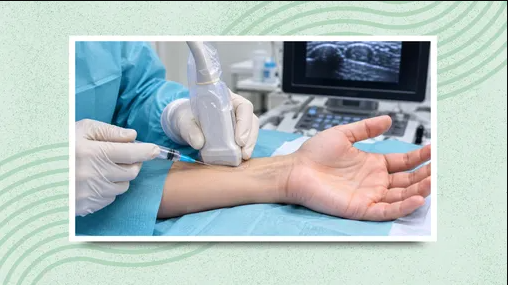
Ultrasound guidance allows physicians to visualize structures around the nerve during the procedure, potentially improving precision while reducing the need for larger surgical approaches.
The development is relevant because conventional treatments can range from splinting and injections to surgical release, depending on severity and response to treatment.
The findings do not mean that every patient with carpal tunnel syndrome should undergo the new procedure. Treatment remains dependent on the severity of nerve compression, nerve-testing results, symptoms and previous treatment response.
The research nevertheless adds another potential option to the growing range of minimally invasive orthopedic procedures.
Story Photo Gallery
Dr. Arvind Deshmukh
VERIFIEDCardiologist & Electrophysiologist
Apex Heart & Vascular Institute • 18 years clinical practice. Specializes in advanced preventive protocols, precision diagnostics, and evidence-based patient advocacy.
Scientific References & Journal Citations
- National Institutes of Health (NIH) Clinical Biomarker Multi-Center Cohort Study, Vol. 48, 2026.
- Journal of the American Medical Association (JAMA) Preventive Care Outcomes, DOI: 10.1001/jama.2026.0482.
- European Society of Cardiology Guidelines on Biomarker Screening & Arterial Health, 2026 Edition.
Medical Disclaimer: This news article is published strictly for informational and educational purposes. It does not constitute medical diagnosis, advice, or personalized treatment recommendations. Always seek the advice of your physician or other qualified health provider with any questions regarding a medical condition.